
Human peripheral blood mononuclear cells (PBMCs) are a cornerstone of immunological and translational research. From immune monitoring and infection biology to oncology and vaccine development, PBMC‑based assays play a critical role in understanding human immune function. One of the earliest and most influential decisions researchers face is whether to work with freshly isolated or cryopreserved (frozen) PBMCs.
Both formats are widely used in modern laboratories, but they are not interchangeable in every context. The optimal choice depends on experimental sensitivity, study design, and logistical constraints. This article outlines the key considerations to help researchers select the PBMC format best suited to their research goals.
PBMCs in Human Immune Research
PBMCs are immune cells derived from hematopoietic stem cells in the bone marrow and isolated from peripheral blood. This heterogeneous population includes T lymphocytes, B lymphocytes, natural killer (NK) cells, monocytes, and dendritic cell subsets. Together, these cells mediate antigen recognition, cytokine secretion, cytotoxic responses, and immune regulation.
Because PBMCs reflect the functional state of the immune system, they are commonly used in:
- Immunology and immune profiling studies
- Infectious disease and host–pathogen interaction research
- Haematological malignancy and cancer immunotherapy research
- Vaccine development and immune monitoring
- Longitudinal and biomarker‑driven clinical studies
The way PBMCs are handled after collection—used immediately or preserved for future use—can influence assay performance and data consistency.
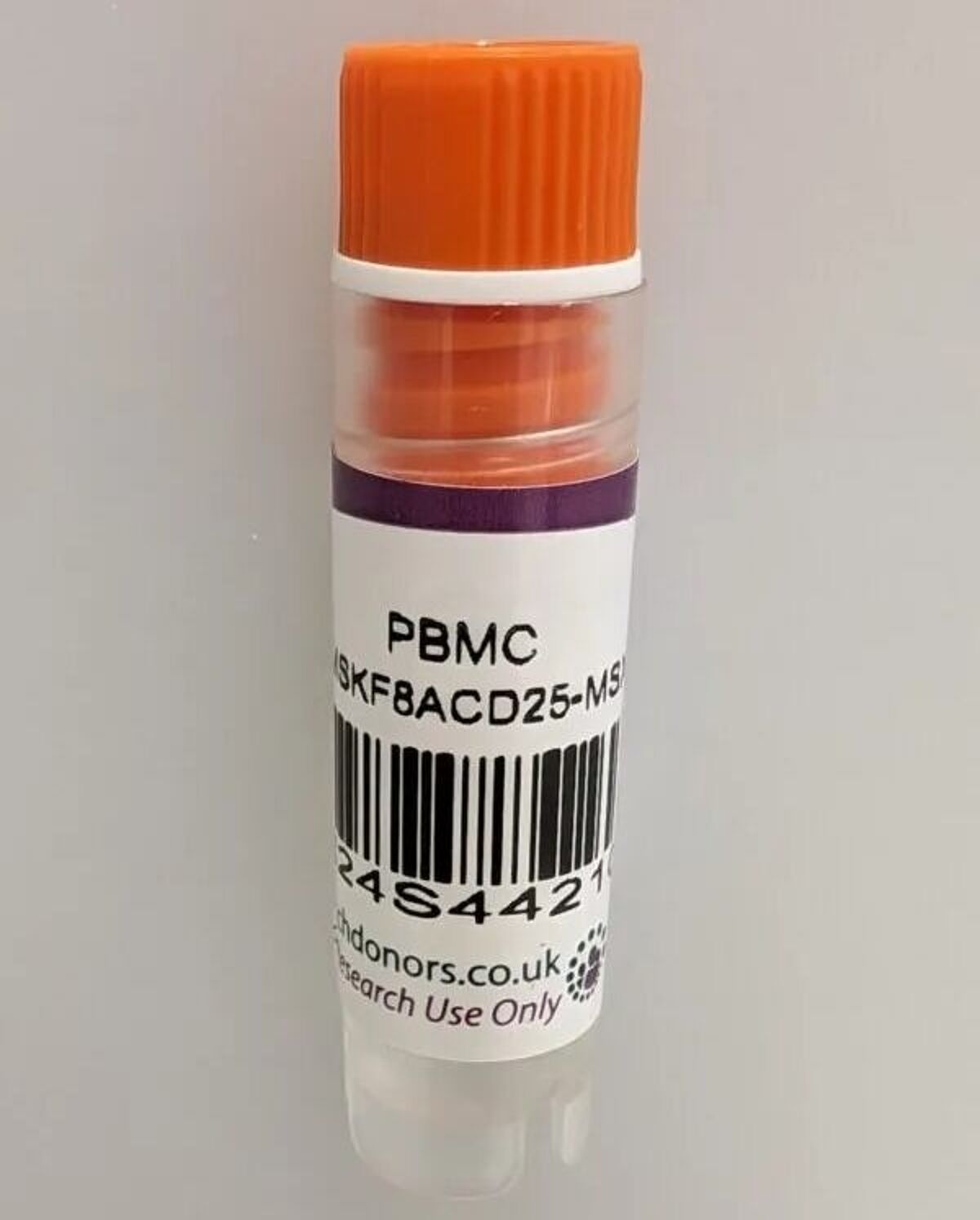
Fresh PBMCs: Strengths and Constraints
Fresh PBMCs are isolated from whole blood or leukapheresis material and used shortly after collection. When processing occurs within approximately 8–24 hours, these cells retain high viability and minimal handling‑related stress.
When fresh PBMCs are advantageous
Fresh cells are often preferred for applications that require maximal responsiveness or minimal manipulation, including:
- Functional assays with high sensitivity (e.g. cytotoxicity, rapid cytokine release)
- Experiments where subtle signaling differences are biologically meaningful
- Short‑term exploratory studies with immediate access to samples
Limitations of fresh PBMCs
Despite their performance advantages, fresh PBMCs present practical challenges:
- Narrow processing window: Delays in isolation or assay setup can rapidly compromise cell quality
- Logistics‑dependent workflows: Use is typically restricted to facilities close to collection sites
- Limited reproducibility over time: Batch‑to‑batch variability can be introduced when samples are collected and processed on different days
As a result, fresh PBMCs are best suited to tightly controlled, short‑term studies where timing can be closely managed.
Frozen PBMCs: Advantages and Limitations
Cryopreserved PBMCs are isolated, frozen, and stored at ultra‑low temperatures for later use. This approach has become increasingly common as studies grow larger, longer, and more geographically distributed.
Advantages of cryopreserved PBMCs
Frozen PBMCs offer several practical and experimental benefits:
- Long‑term storage: Samples can be banked for months or years, supporting extended or multi‑phase studies
- Improved logistical freedom: Cryopreserved cells can be shipped globally and thawed on demand
- Consistency in longitudinal studies: Using aliquots from the same batch reduces variability across experimental timepoints
When cryopreservation is well executed, frozen PBMCs are suitable for most phenotypic, functional, and immunomonitoring assays.
Considerations when working with frozen cells
Freezing and thawing can introduce cell stress that may affect:
- Overall post‑thaw viability
- Recovery of specific immune cell subsets
- Functional readouts in highly sensitive assays
These effects are strongly influenced by the quality of cryopreservation protocols rather than freezing itself.
Why Cryopreservation Quality Matters
The preservation of PBMCs is a technically sensitive process. Cellular damage typically arises from ice crystal formation, osmotic stress, and temperature shock during freezing or thawing. Modern cryobiology approaches are designed to minimise these risks.
Key factors that support high‑quality frozen PBMCs include:
Optimised cryopreservation media
Cryoprotective agents reduce intracellular ice formation and protect cell membranes and organelles. Proper formulation is essential to preserve both viability and immune phenotype.
Controlled‑rate freezing
Gradual, controlled cooling allows water to exit the cell before freezing occurs. This reduces intracellular ice formation and mechanical damage, leading to improved post‑thaw recovery.
Standardised thawing and recovery protocols
Careful thawing and handling following cryostorage are critical for maximising viable cell yield and maintaining functional performance.
With these methods in place, cryopreserved PBMCs can closely approximate fresh cells in many experimental settings.
Fresh vs Cryopreserved PBMCs: Practical Comparison
Viability and functional sensitivity
Fresh PBMCs generally exhibit the highest immediate viability and responsiveness. Cryopreserved PBMCs may show modest reductions post‑thaw, but well‑preserved samples retain sufficient functionality for most applications.
Logistical flexibility
Fresh PBMCs require rapid processing and coordinated workflows. Cryopreserved PBMCs enable experimental flexibility, remote collaboration, and simplified scheduling.
Reproducibility and scale
Frozen PBMCs are particularly well suited for large‑scale or longitudinal studies, where consistency across timepoints is critical.
Study design compatibility
Fresh PBMCs are optimal for short‑term, high‑precision assays. Cryopreserved PBMCs support long‑term, multi‑site, or repeat‑measure study designs.
Choosing the Right PBMC Format
The decision between fresh and cryopreserved PBMCs should be guided by a balance of scientific and practical considerations:
- Choose fresh PBMCs when maximum responsiveness is essential and samples can be processed immediately
- Choose cryopreserved PBMCs when flexibility, consistency, and long‑term study design are priorities
Advances in cryopreservation media and controlled‑rate freezing have significantly narrowed the performance gap between fresh and frozen PBMCs. As a result, cryopreserved cells are no longer a compromise for many applications, but a reliable and strategic choice for modern research.
PBMCs from Research Donors
LubioScience offers products from Research Donors, a UK-based, HTA-licensed company specializing in human blood biospecimen collection for life science research. They offer both fresh and frozen PBMCs, along with other blood products like whole blood, leukopaks, plasma, and serum. Their frozen PBMCs are processed within five hours of collection, using best in market cryopreservation solutions and controlled-rate freezing protocols. Most PBMCs come from HLA-typed leukapheresis donations, and Research Donors provides customizable options to meet exact research needs.
Featured Supplier

Research Donors
We ensure you get the Right Donor, the Right Sample at the Right Time for your research. We collect from a large diverse pool of donors. Sample types include whole blood, leukopaks, PBMCs, buffy coat, plasma, serum and much more. All samples are collected under a comprehensive informed consent for commercial and genetic research, and are processed to the highest quality standards in an ISO accredited and HTA (Human Tissue Authority) licenced facility.