
Key summary
Cancer care is evolving, and precision oncology is leading the way. Learn how minimal residual disease (MRD) monitoring and multi-cancer early detection (MCED) are transforming treatment strategies and how IDT is delivering advanced NGS solutions that are precision-engineered to power the research behind this progress.
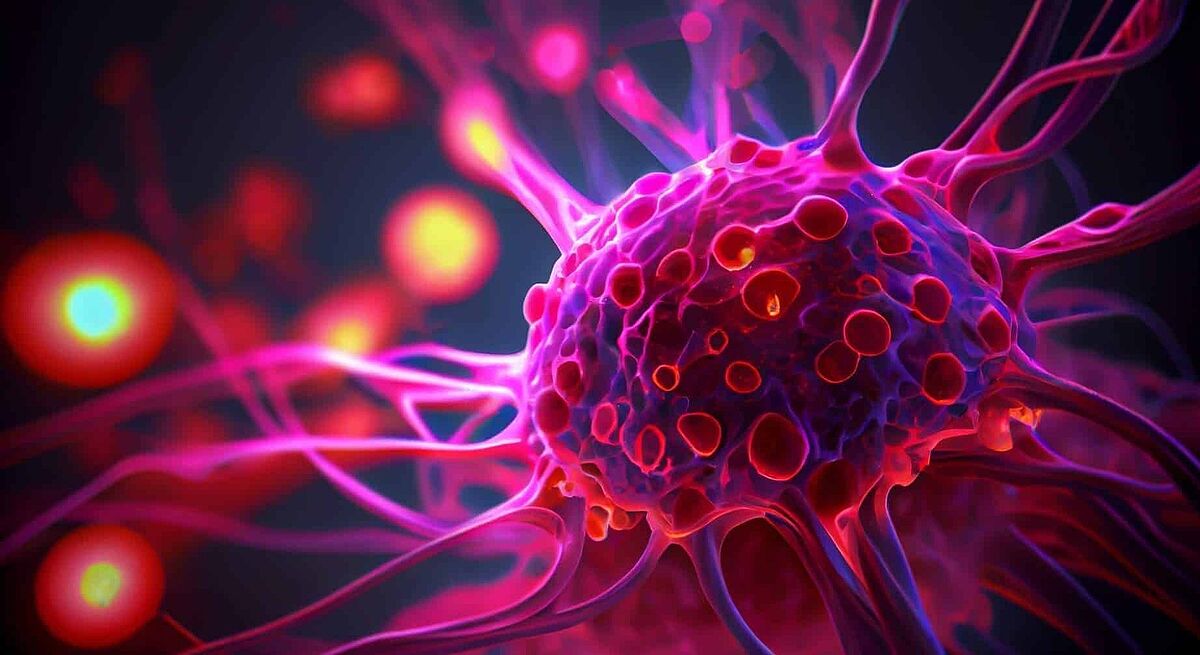
Cancer remains one of the most challenging health concerns of our time. In 2025, more than two million new cancer cases are expected to be diagnosed in the U.S., and tragically, over 618,000 people will lose their lives to the disease. These numbers underscore the urgent need for better tools to detect, monitor, and treat cancer earlier and more effectively.
The landscape of cancer research and diagnostics is undergoing a profound shift. Precision oncology—an approach that tailors treatment based on individual genetic and molecular profiles—has moved from concept to clinical reality. Among the most significant developments are two interrelated trends: Multi-cancer early detection (MCED) and minimal residual disease (MRD) monitoring. These innovations promise to detect cancer earlier, monitor treatment effectiveness more accurately, and ultimately improve patient outcomes.
MCED represents a new frontier in cancer screening. With a single blood draw, this test analyzes cell-free DNA (cfDNA) and other biomarkers to detect multiple cancer types at their earliest stages, even in asymptomatic patients. This proactive approach aims to identify cancer before it becomes widespread, offering a significant advantage in improving patient outcomes.
While MCED focuses on early detection, another critical challenge arises after treatment: Minimal residual disease (MRD), which refers to the small number of cancer cells that remain in the body after treatment. These cells can evade traditional imaging and laboratory tests, leading to relapses that often go undetected until they are advanced. Detecting MRD early can inform decisions about adjuvant therapy, reduce overtreatment, and improve survival rates.
Next generation sequencing (NGS) plays a pivotal role in MRD and MCED detection. When cancer cells die, they release fragments of DNA, known as circulating tumor DNA (ctDNA). These fragments often occur at extremely low concentrations, making detection challenging. NGS-based MRD assays can analyze cfDNA circulating in the bloodstream. By sequencing cfDNA, scientists can identify tumor-specific markers and determine whether residual disease persists.
Integrated DNA Technologies driving progress in MRD research
IDT's manufacturing capabilities and their NGS expertise play an important role in powering MCED and MRD assessment and support their mission to accelerate the pace of genomics to drive life-changing advances. In 2023, IDT's team of experts saw an unmet need for MRD assessment tools to increase their sensitivity—so that same year, they launched the xGen™ MRD Hybridization Panel alongside their xGen™ cfDNA & FFPE DNA Library Prep Kit, providing researchers with powerful and reliable tools to identify residual disease in highly degraded samples.
Since then, IDT has continued to optimize their existing solutions to demonstrate their commitment to innovation. In April 2025, IDT launched their xGen™ Hybridization and Wash v3 Kit—providing an easier workflow for scientists to identify cancer variants and mutations, including rare variants, from low-input samples. Many of their scientific posters at the AMP 2025 Annual Meeting and Expo highlighted this kit’s real-world applications—with IDT scientists demonstrating everything from increased workflow flexibility to the effect of fragment size on hybridization targeting.
Accelerating innovation through strategic partnerships
Collaboration is the cornerstone of progress. IDT's partnerships with industry-leading organizations like Beckman Coulter and Hamilton demonstrate their promise to drive discoveries in precision oncology. By joining forces with other teams to integrate their technologies, IDT is accelerating assay development, streamlining workflows with automation, and delivering comprehensive solutions to scientists at the forefront of cancer research.
By enabling researchers to push the boundaries of science, IDT is helping move toward a future where cancer can be detected earlier and treated more effectively. With more people living with complex cancer, they're committed to helping researchers unlock actionable insights—which are critical for treatment discoveries.
A bright future for patients
On the path ahead, the impact of MRD testing on cancer care will be profound. Combined with MCED, these innovations could transform cancer from a late-stage diagnosis to a manageable chronic condition—or even a preventable one.
As this technology evolves, treatment plans will shift from broad-spectrum approaches to highly personalized strategies, targeting cancer at the cellular level. Clinicians will be able to identify and treat the exact cells that need intervention, improving outcomes and reducing unnecessary toxicity.
This shift isn’t just theoretical—it’s already influencing the market. Industry moves, such as Abbott’s acquisition of Exact Sciences, highlight the growing importance of MRD and MCED in early detection and cancer care. These developments signal a future where precision medicine isn’t just an aspiration—it’s the standard.
Supplier
IDT - Integrated DNA Technologies
With over 30 years experience as a manufacturer, IDT offers innovative tools for NGS, CRISPR, qPCR and PCR. IDT offers superior quality DNA and RNA oligos, genes, gene fragments, Cas nucleases and more, with fast turnaround times!
About IDT Shop for IDT products