
Severe or prolonged stress can disrupt normal brain function and contribute to the development of anxiety disorders. The amygdala, a key brain region involved in emotional processing, plays a central role in stress-induced anxiety. MicroRNAs (miRNAs), small non-coding RNA molecules that regulate gene expression, have been implicated in several neuropsychiatric conditions, including anxiety. However, the specific role of miRNAs within the amygdala has remained largely unclear.
In a groundbreaking study, researchers at the University of Exeter Medical School led by Professor Robert Pawlak investigated the role of the microRNA miR-483-5p in regulating the brain's response to stress. Their findings revealed that miR-483-5p can counteract both the functional and behavioural effects of stress in male mice, providing new insights into the molecular mechanisms underlying anxiety.
Exploring miR-483-5p in the amygdala
Psychological stress triggers widespread changes in gene expression within the amygdala, many of which are regulated by miRNAs. Following acute restraint stress, miR-483-5p was identified as the most strongly upregulated of five stress-responsive miRNAs detected in the amygdala.
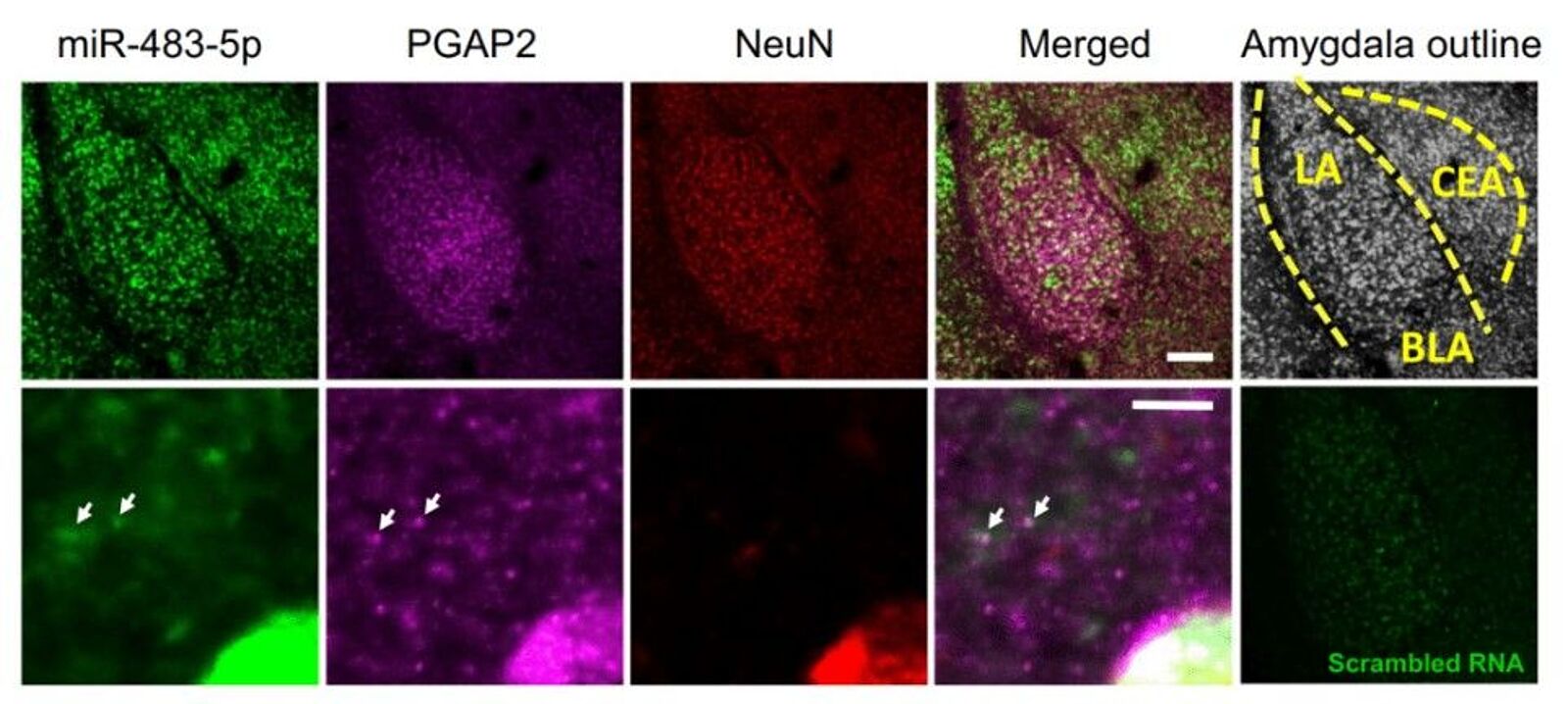
Using fluorescence in situ hybridization (FISH), the researchers demonstrated that miR-483-5p is primarily expressed in neurons within the amygdala and is particularly enriched in the synaptic compartment. Moreover, stress exposure increased miR-483-5p levels within synaptosomes, suggesting that this microRNA is both localized to synapses and dynamically regulated by stress.
Bioinformatic analyses identified twelve potential target genes of miR-483-5p. Subsequent in vitro and in situ experiments confirmed that miR-483-5p suppresses several genes, including Pgap2, Gpx3, and Macf1. Among these, Pgap2 emerged as a particularly important target and was selected for further behavioural investigations due to its potential role in mediating the effects of miR-483-5p in the amygdala.
Impact on neuronal morphology
The researchers discovered that miR-483-5p induces selective structural remodeling of amygdala neurons. Specifically, the microRNA caused shrinkage of distal dendrites while leaving proximal dendrites largely unaffected.
In addition, miR-483-5p altered dendritic spine morphology by increasing the proportion of mature mushroom-shaped spines and reducing the number of highly plastic filopodia-like structures. Similar effects were observed in mice that received viral-mediated delivery of miR-483-5p into the amygdala.
A modest increase in spine density was also detected in neurons overexpressing miR-483-5p. Together, these findings suggest that miR-483-5p promotes spine maturation and stabilizes neuronal connectivity following psychological stress.
Anxiolytic effects mediated through Pgap2 regulation
To determine whether these cellular changes translated into behavioural outcomes, the researchers examined the effects of miR-483-5p overexpression in mice.
Animals with elevated miR-483-5p expression in the amygdala displayed lower anxiety levels and spent more time exploring the open arms of an elevated plus maze, a common measure of anxiety-like behaviour. Furthermore, increasing miR-483-5p expression prevented the development of anxiety-like behaviours following acute restraint stress.
The study also investigated the role of the Pgap2 gene. Experimental suppression of Pgap2 produced behavioural effects similar to those observed with miR-483-5p overexpression, including reduced anxiety-like behaviour and increased exploratory activity. Importantly, restoring expression of a miR-483-5p-resistant form of Pgap2 reversed the anxiolytic effects of miR-483-5p, demonstrating that repression of Pgap2 is a critical component of the mechanism through which miR-483-5p influences stress responses.
Implications for stress and anxiety research
The findings from the University of Exeter Medical School provide compelling evidence that miR-483-5p serves as an important regulator of stress-induced changes in brain function and behaviour. By modifying neuronal structure, regulating gene expression, and suppressing anxiety-like behaviours, miR-483-5p appears to function as a protective molecular mechanism in response to stress.
These discoveries deepen our understanding of how microRNAs influence the neural circuits involved in anxiety and may inform future research into therapeutic strategies aimed at treating stress-related neuropsychiatric disorders.
Supplier

GenTarget
GenTarget is a specialist provider of viral vector technologies, with a comprehensive portfolio of lentiviral vectors, adenoviral vectors, reporter systems and custom gene delivery services. The company helps researchers simplify gene expression, gene silencing, genome editing and cell engineering workflows across basic research and translational applications.