
What is Spatial Biology?
Spatial biology reveals the complex interactions between cells and their surrounding tissue microenvironment—including the extracellular matrix, immune cells, stromal cells, and vasculature. By maintaining spatial context, researchers can gain deeper insights into tissue architecture and disease progression.
Multiplex Immunofluorescence (mIF)
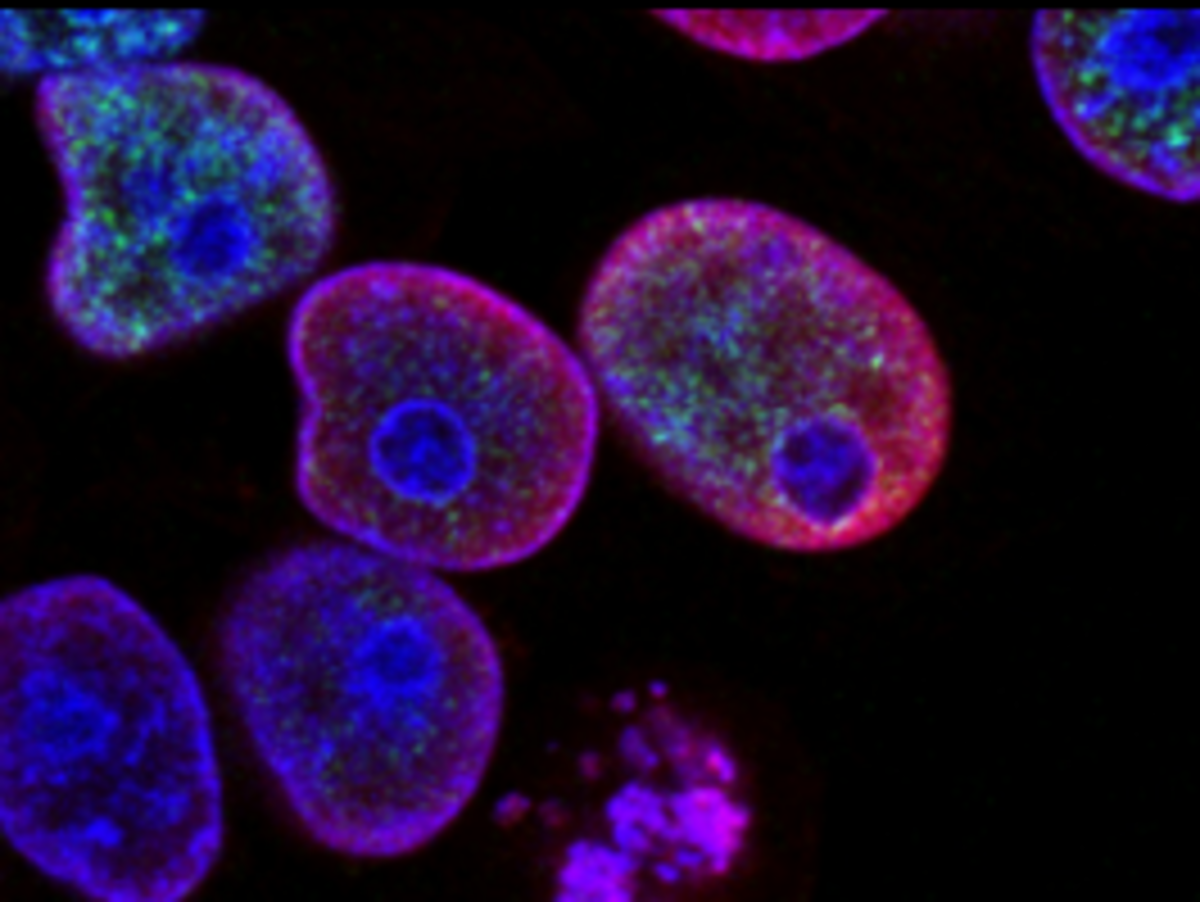
Multiplex immunofluorescence stands as a vital technique in spatial biology. It allows scientists to detect and study multiple protein markers within a single tissue section—preserving the spatial arrangement and interactions between cells.
Why It Matters?
- Simultaneous detection of multiple proteins.
- Detailed mapping of cell types and their interactions.
- Invaluable for biomarker discovery, therapeutic development, and personalized medicine.
Products
| Cat-No. | Item | Size | Price (CHF) |
|---|---|---|---|
| ORB1519964-100UL | CD3E Rabbit Recombinant Monoclonal Antibody | 100 ul | 816.00 |
| ORB1520131-100UL | CD20 Mouse Monoclonal Antibody | 100 ul | 816.00 |
| ORB1519949-100UL | Ki-67 Rabbit Recombinant Monoclonal Antibody | 100 ul | 816.00 |
| ORB1519952-100UL | PD-L1 Rabbit Recombinant Monoclonal Antibody | 100 ul | 816.00 |
| ORB1519946-100UL | Granzyme B Rabbit Recombinant Monoclonal Antibody | 100 ul | 816.00 |
Tyramide Signal Amplification (TSA)
Tyramide Signal Amplification enhances sensitivity and signal resolution in immunofluorescence staining—perfect for detecting low-abundance targets.
How TSA works
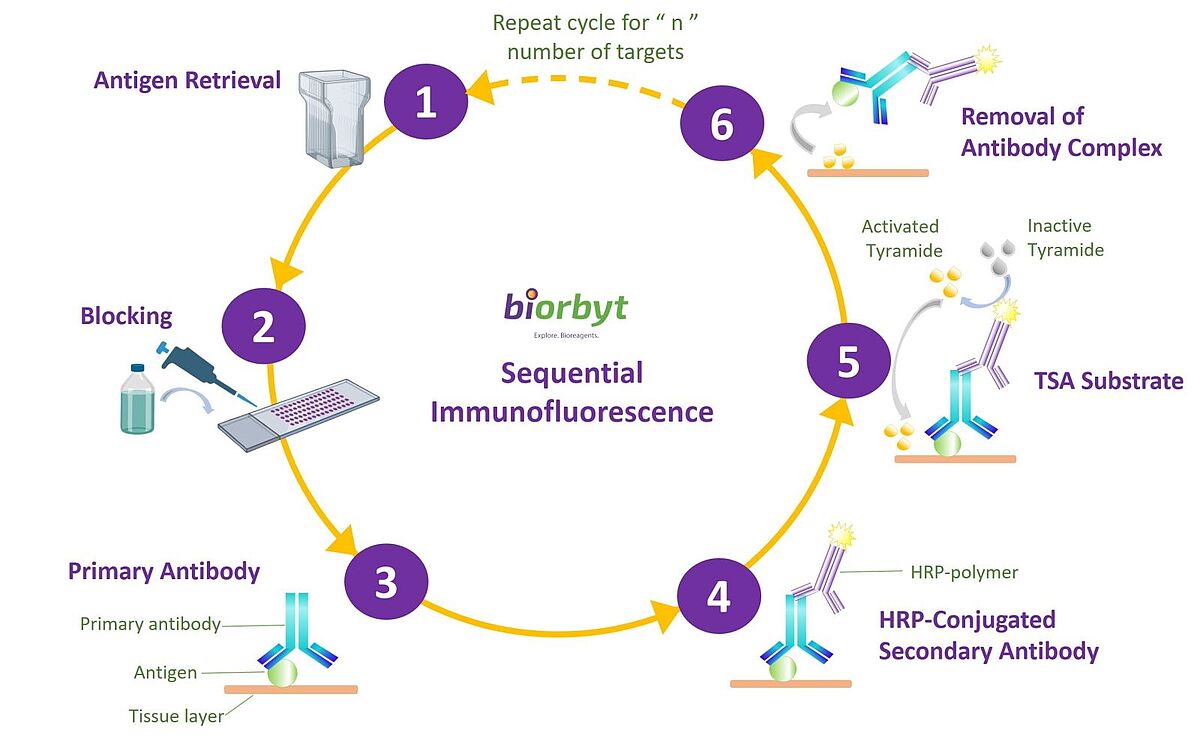
- HRP-conjugated antibodies and hydrogen peroxide catalyze fluorophore binding to proteins.
- Primary and secondary antibodies for the first target are applied and deposited.
- Heat-induced epitope retrieval (HIER) removes them before repeating for the next target.
- The process is repeated for up to 6 targets (or more), depending on the system.
Does Antibody Order Matter?
The sequence in which antibodies are applied can significantly affect staining quality. Proper ordering ensures optimal antibody performance and minimizes background.
Key reasons include:
- Heat Exposure: Repeated heating can alter epitope-antibody binding.
- Tyramide Blocking: Early tyramide deposits can block later antibodies.
- Tyramide Trapping: Tyramide may trap antibodies, causing unintended signals in later steps.
Cyclic Immunofluorescence (Cyclic IF)
Cyclic IF (also known as CyCIF or MxIF) enables high-plex imaging by cycling through multiple rounds of staining and imaging.
How Cyclic IF Works:
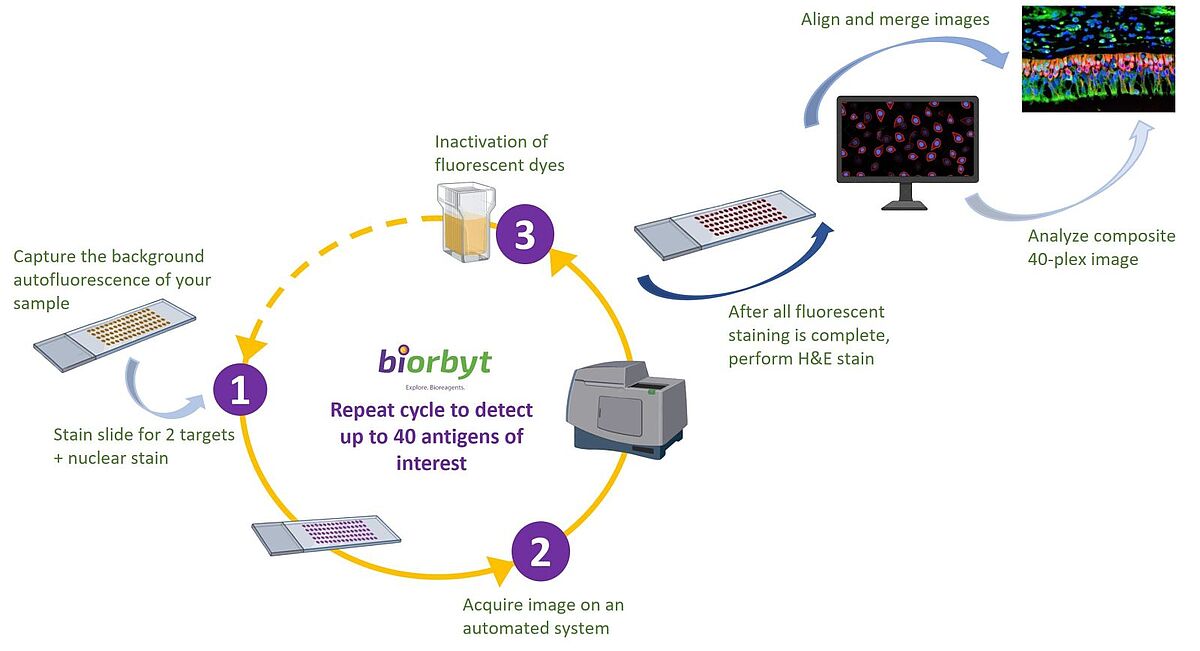
- Multiple fluorophore-conjugated antibodies are applied in each round.
- After imaging, dyes are inactivated (via photobleaching or chemical methods).
- The same fluorophores can then be reused in the next cycle.
- Images from all cycles are aligned and merged using nuclear staining (DAPI or Hoechst).
Advantages:
- Enables the detection of dozens of targets
- Maintains tissue and epitope integrity
- Requires fewer unique fluorophores
- Allows for detailed spatial analysis
Products
| Cat-No. | Item | Size | Price (CHF) |
|---|---|---|---|
| ORB1519159-1PANEL | Immune Checkpoint Profiling Antibody Panel | 1 panel | 1'549.00 |
| ORB1519154-1PANEL | Tumor Proliferation and Metastasis Antibody Panel | 1 panel | 2'983.00 |
| ORB1519155-1PANEL | T Cell Activation and Proliferation Antibody Panel | 1 panel | 2'983.00 |
| ORB1519157-1PANEL | Immune Cell Localization Antibody Panel | 1 panel | 1'549.00 |
| ORB1519156-1PANEL | Tumor Immune Suppression Antibody Panel | 1 panel | 2'983.00 |
| ORB1519152-1PANEL | T Cell Exhaustion and Activation Antibody Panel | 1 panel | 2'983.00 |
| ORB1519153-1PANEL | T Cell Maturation and Differentiation Antibody Panel | 1 panel | 2'505.00 |

Biorbyt
Biorbyt offers a wide range of reagents to meet your needs, from antibodies, ELISA kits, transfection reagents, buffers and other biochemicals.