
DNA extraction forms the foundation of molecular biology workflows and has a direct impact on the reliability and performance of all downstream applications. Even trace levels of residual contaminants can affect assay efficiency, reproducibility, and overall data integrity.
As workflows become increasingly sensitive and are distributed across multiple users and laboratory sites, ensuring consistent DNA quality is no longer optional, it is essential.
Why DNA yield alone is not enough
Many extraction protocols focus primarily on maximising DNA recovery. However, a high yield does not automatically indicate that the DNA is fit for downstream use. During extraction, a range of unwanted substances can be co-purified, including salts, ethanol, detergents, chaotropic agents, proteins, and inhibitors derived from the sample itself.
These contaminants can compromise downstream workflows in several ways:
- Interfering with enzymatic reactions such as PCR, qPCR, and library preparation
- Reducing ligation and amplification efficiency
- Skewing quantification results
- Introducing variability that may only become apparent after significant time and reagent investment
Importantly, these issues are not always visible immediately after extraction. Samples with similar yields and acceptable absorbance ratios can still behave very differently in sensitive enzymatic assays.
Sources of variability in DNA workflows
Even in well-controlled laboratory environments, variability cannot be completely eliminated. Differences in user technique, local standard operating procedures, reagent handling, equipment calibration, and water quality can all influence DNA quality. In addition, the extraction method itself, whether column-based, bead-based, manual, or automated, introduces further variability, along with differences in sample complexity.
When workflows are scaled across teams or multiple sites, these factors can compound. Over time, it becomes increasingly difficult to determine whether observed variation in downstream results reflects true biological differences or inconsistencies introduced during upstream processing.
Rather than attempting to remove all variability at the extraction stage, many laboratories are shifting toward a more controlled approach: standardising DNA quality before downstream use.
DNA clean-up as a standardisation strategy
Incorporating a dedicated DNA clean-up and concentration step introduces a controlled checkpoint in the workflow. This step brings all samples to a consistent level of purity and compatibility, regardless of their original extraction method. As a result, downstream performance is more likely to reflect biological variation rather than residual contaminants.
An effective clean-up solution should:
- Remove inhibitory substances consistently and efficiently
- Transfer DNA into a buffer that is compatible with downstream applications
- Provide flexibility to both concentrate and normalise DNA input
- Be simple to implement and reproducible across different users and laboratory settings
The value of Zymo’s DNA Clean & Concentrator
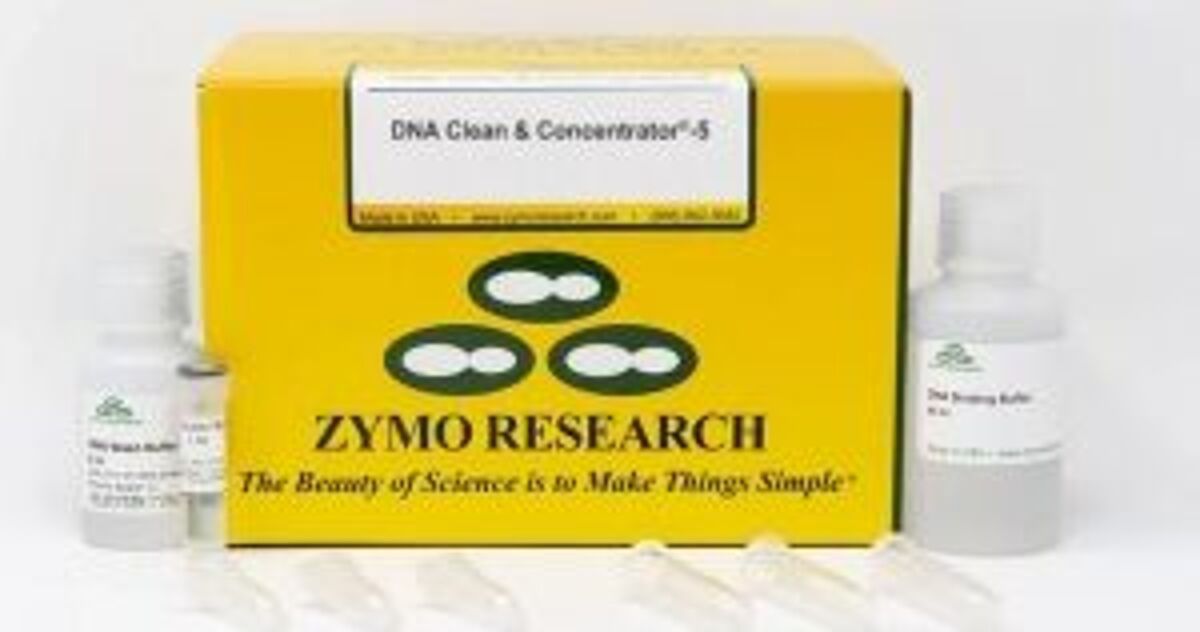
Zymo’s DNA Clean & Concentrator is designed to integrate seamlessly with existing extraction workflows, rather than replace them. By applying a uniform purification step to all samples, it helps minimise variability introduced earlier in the process.
Key benefits include:
- Consistent clean-up across extraction methods: Reduces variability between column-based, bead-based, manual, and automated workflows
- Efficient removal of salts, ethanol, enzymes, and detergents: Improves compatibility with downstream enzymatic reactions
- Flexible elution volumes: Enables both DNA concentration and input normalisation without requiring re-extraction
- User-independent performance: Limits variability caused by differences in technique, particularly in shared or high-throughput laboratory environments
Together, these features help ensure that DNA entering downstream applications meets a consistent and reliable quality standard.
Enhancing confidence in downstream results
Using cleaner and more consistent DNA inputs leads to measurable improvements in downstream performance. PCR and qPCR assays benefit from reduced inhibition and greater reproducibility. NGS library preparation shows higher conversion efficiency, fewer failed libraries, and more consistent results between runs. In collaborative and multi-site studies, standardised DNA quality enables more reliable comparison and integration of data.
What may appear to be a small addition to the workflow can have a significant impact on robustness, ultimately saving time, reducing reagent consumption, and minimising troubleshooting efforts.
Integrating DNA purity into workflow design
DNA purity affects every downstream outcome, yet it is often only addressed once issues arise. By incorporating a standardised clean-up step such as the Zymo DNA Clean & Concentrator, laboratories can take a proactive approach to managing variability introduced by users, sites, and extraction methods.
Featured supplier
Zymo Research
Zymo Research is a leader in molecular biology, offering a comprehensive range of products for DNA, RNA, and epigenetics research. Established in California in 1994, the company is renowned for its high-quality nucleic acid purification technologies, including kits and reagents for DNA and RNA clean-up, isolation, and sequencing. Zymo is also a pioneer in epigenetics, with products for DNA methylation analysis, chromatin analysis, and NGS library preparation. Each product is designed to be simple to use, reliable, and available at competitive prices, making them ideal for both academic and biopharmaceutical research.